
Perplexity's Personal Computer Isn't a Product. It's a Preview.

By Jason Oglesby · March 14, 2026
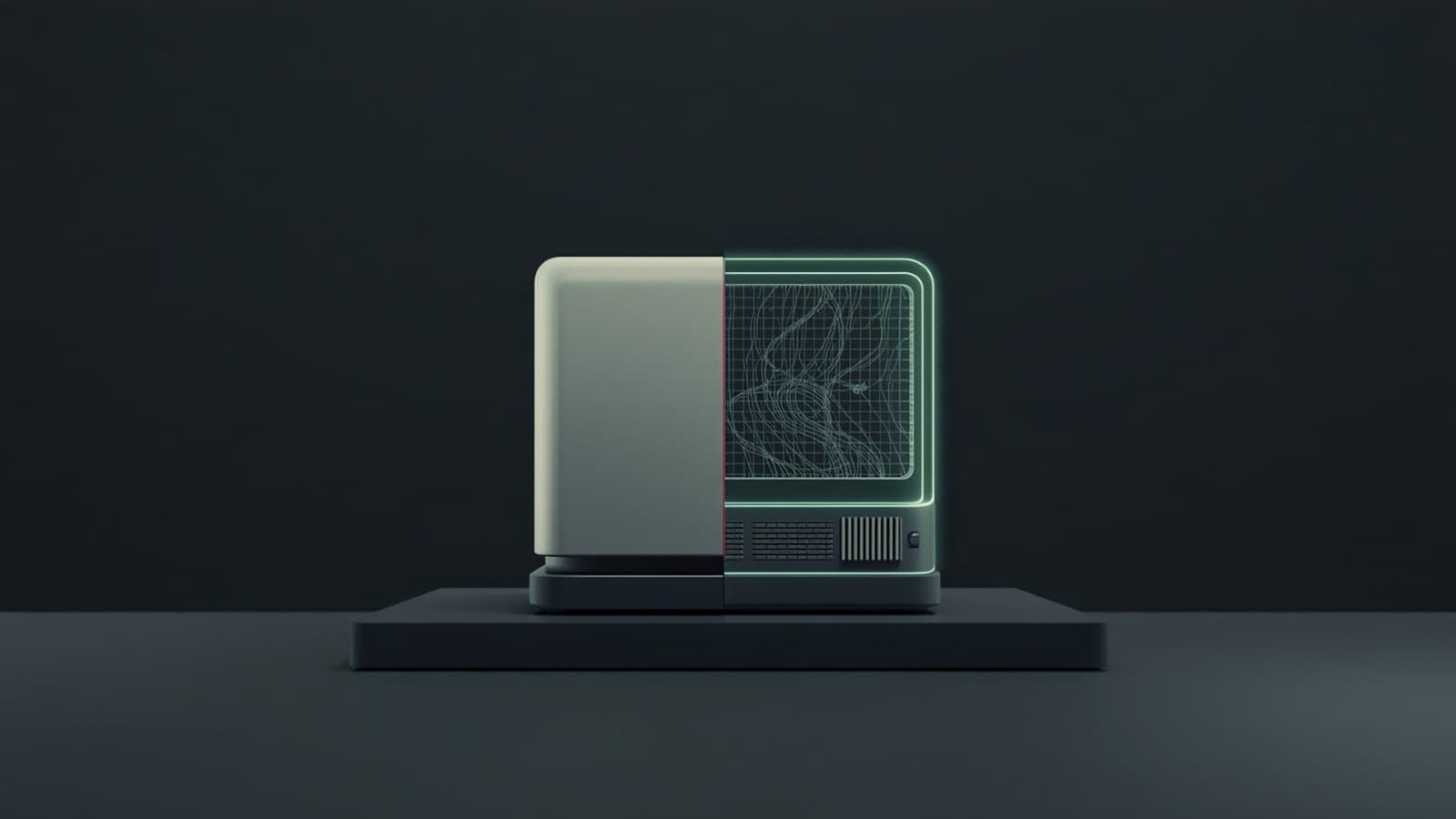
I'm setting up Perplexity's Personal Computer today. And I'll be honest. It's one of those moments where I can feel the ground shifting.
For those who haven't seen it: Perplexity launched a product this week that turns a Mac mini into a 24/7 AI agent. Not a chatbot. Not an assistant you prompt. An autonomous system that connects to your Gmail, Slack, GitHub, Notion, Salesforce, whatever you point it at, and executes multi-step workflows while you're doing other things. While you're sleeping.
You describe an outcome. It builds a plan. It works.
You can check in from your phone, from a browser on a hotel laptop, from anywhere. You see what it did, what it's doing, what it needs approval for. There's a full audit trail. Sensitive actions require your sign-off. But the default state is that it's working, not waiting for you to type something.
$200 a month. Runs on a Mac mini with an M4 chip and 64GB of RAM. Local files, local access, secure environment.
That's the product. But the product isn't the point.
The Shift Nobody Is Talking About
For the past three years, AI has been a conversation. You open a chat window. You type a prompt. You get a response. You refine. You iterate. The human is the orchestrator, the AI is the tool.
Perplexity's Personal Computer inverts that relationship.
The AI becomes the orchestrator. You become the person who defines the objective and reviews the output. The entire loop between "I need this done" and "it's done" collapses from hours of manual coordination to a description of what you want.
This isn't a better chatbot. It's a different category of thing entirely. And the implications for how leaders think about work, delegation, and organizational design are massive.
What I'm Actually Seeing
I'm still early in the setup, so I'll reserve the full review. But a few things are already striking:
The integration model is right. It doesn't ask you to move your work into a new platform. It connects to where your work already lives, your email, your files, your tools. That's how adoption actually happens.
The approval gates matter. Every sensitive action requires explicit sign-off. This isn't a black box running wild on your machine. It's a system with guardrails, and the audit trail means you can see exactly what it did and why. That's the difference between a tool you trust and a tool you're afraid of.
The always-on model changes your relationship with productivity. When you close your laptop, it doesn't stop. When you're in a meeting, it's still working. That's a fundamentally different mental model than any tool I've used before. You're not "using AI", you're delegating to it.
Why Leaders Should Pay Attention
If you're running a team, a company, or even a solo operation, here's what Perplexity's Personal Computer signals about where everything is heading:
Delegation is being redefined. Today, delegation means assigning a task to a person and checking in later. Tomorrow, delegation means describing an outcome to an AI agent and reviewing what it produced. The skill set for leaders doesn't change, clarity of intent, quality of review, ability to course-correct, but the speed and cost of execution drops by an order of magnitude.
The "AI strategy" conversation is about to get very concrete. Abstract debates about "how should we use AI" are going to be replaced by very specific questions: Which workflows do we point the agent at first? What approval gates do we need? Who reviews the output? How do we measure whether it's actually working? These are operations questions, not technology questions.
The gap between AI-native and AI-adjacent organizations is about to widen. Companies that have clean workflows, documented processes, and clear success metrics will be able to plug systems like this in almost immediately. Companies that are still running on tribal knowledge and ad hoc processes will watch from the sideline.
This is exactly what we mean when we talk about building the boring stuff first.
The Honest Take
I don't know yet if Perplexity's Personal Computer is the product that defines this category. It might be. It might be a preview of something better that comes in six months. OpenClaw and a dozen other frameworks are working on similar ideas from different angles.
But the category is real. The idea that AI moves from a thing you talk to into a thing that works for you, continuously, on your own machine, across your own tools, that's not speculation anymore. It's a product you can buy today for $200 a month.
And if you're a leader who hasn't started thinking about what autonomous AI agents mean for your organization, your workflows, and your team structure, this is your signal.
The future of work isn't AI replacing humans. It's AI working alongside humans at a speed and continuity that no purely human team can match. The leaders who figure out how to manage that hybrid, human judgment plus machine execution, will outperform everyone else.
Not eventually. Soon.